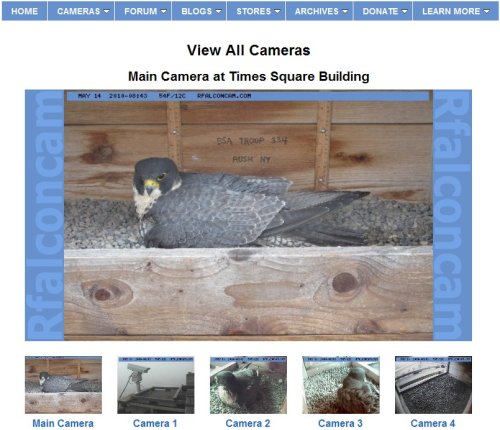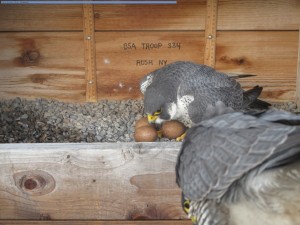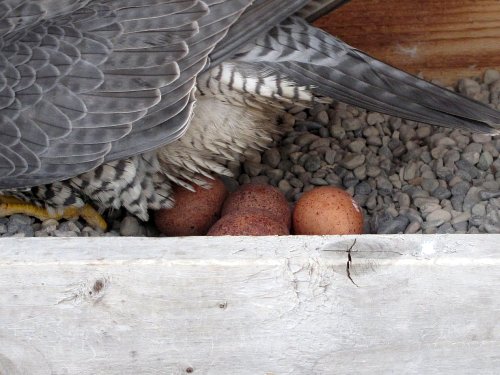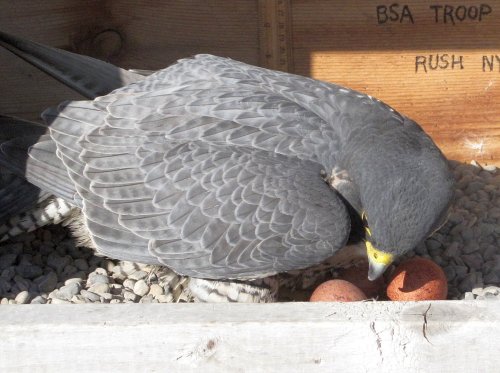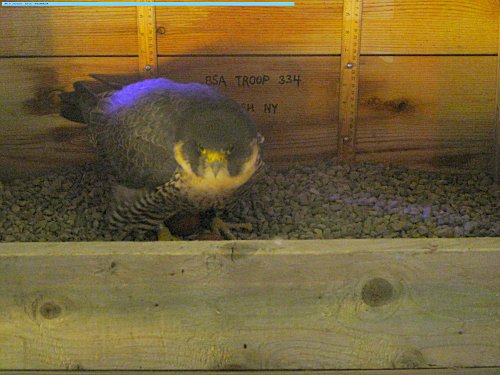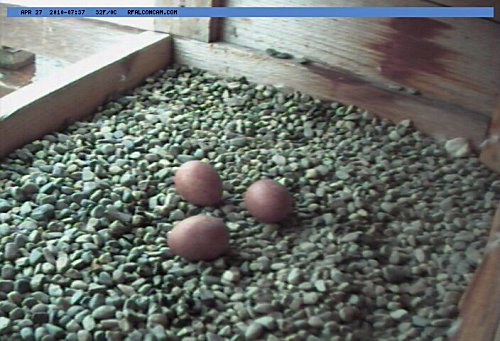
Today Falconcam viewers woke to find only three eggs in the nest box. Yesterday afternoon we noticed that one of Beauty’s four eggs appeared to have a dent or dimple in it. That most likely meant that the egg was non-viable. Then early this morning the cameras captured pictures of Beauty disposing of the egg, which had a large crack in it.
All birds including falcons may occasionally lay unfertilized eggs (poultry birds do it all the time; that’s where our breakfast eggs come from). Sometimes new falcon pairs don’t always get things quite right in the reproduction and egg-laying department, so this isn’t too unusual. In 2002 Mariah laid four eggs, but only two hatched. One of those was Freedom, Archer’s father. And back in 2007 one of Mariah’s eggs just disappeared during the night. So this isn’t the first time we’ve lost eggs here in Rochester, and likely it won’t be the last.
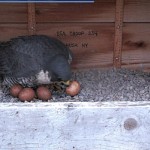 The “bad” egg was the one that was lighter in color than the others. Lighter color by itself doesn’t necessarily mean the egg is going to be non-viable though. There’s a lot of variation in the color of Peregrine eggs. They range from pale pink or brown to dark brownish or even burgundy, so don’t read too much into this coincidence.
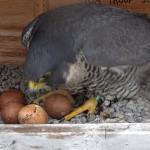 We’ll probably never know exactly what caused this egg to fail. Sometimes birds lay empty eggs, but a close look at some of the pictures makes it clear that this one did have a yolk inside. We’ve discussed egg laying, along with the falcon reproductive cycle in previous Imprints articles (click the links to view the posts), but this is the first time we’ve had a really clear look at a non-viable egg. So even though it might be a little disturbing, it’s a good opportunity for us to observe the process of egg removal from the nest box.
Some of you are probably wondering what became of the discarded egg. At 7:35 this morning our cameras caught Beauty moving the damaged egg around. Just one minute later, the egg was no longer in the nest box, and Beauty was gone. At 7:38 Archer came in to incubate the three remaining eggs.
We’ve sent a message to our partners at the DEC to see if they can provide any other insights about the loss of this egg. We’ll bring you whatever answer we receive from them as soon as we get it. In the meantime, it looks like the falcons haven’t missed a beat, despite the cold wet snow that’s falling in Rochester right now, so we expect the brooding of the remaining eggs to continue normally. We’ll be sure to keep you up to date on all the happenings at the nest box as we await hatching in mid May.
UPDATE: We’ve heard back from Barbara Loucks at the DEC. Here’s what she has to say about the situation:
Not super unusual. May or may not have had an embryo in it. Don’t be surprised if it’s pushed out, treated like the others, or even disappears (eaten or carried off). If it’s still there at banding we’ll collect it. Perhaps it got jostled suddenly during turning or an incubation exchange, or smacked against a rough edged pebble, who knows. That’s why incubation is such a delicate period.

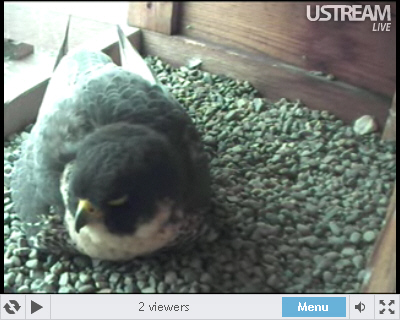
 Simply go to the
  button at the bottom of the screen to start playing the live webcast.